from generation to generation
Rashi or the Vilna Gaon — who came first? Draw a card, hear the event, and place it in your timeline. Thousands of years of Jewish history, one card at a time, around your own table.
How it plays
Where does it fall in history?
Every card names an event. Someone reads it aloud with the date covered — you decide where it belongs among the cards already in your timeline.
- 1Hear the eventThe player on your left reads it aloud — date covered.
- 2Place itBefore, after, or between the cards in your timeline.
- 3Revealed only if rightRight, and the date is shown and the card is yours. Wrong, and it stays hidden for the next player to try.
The cards
Every card, two calendars
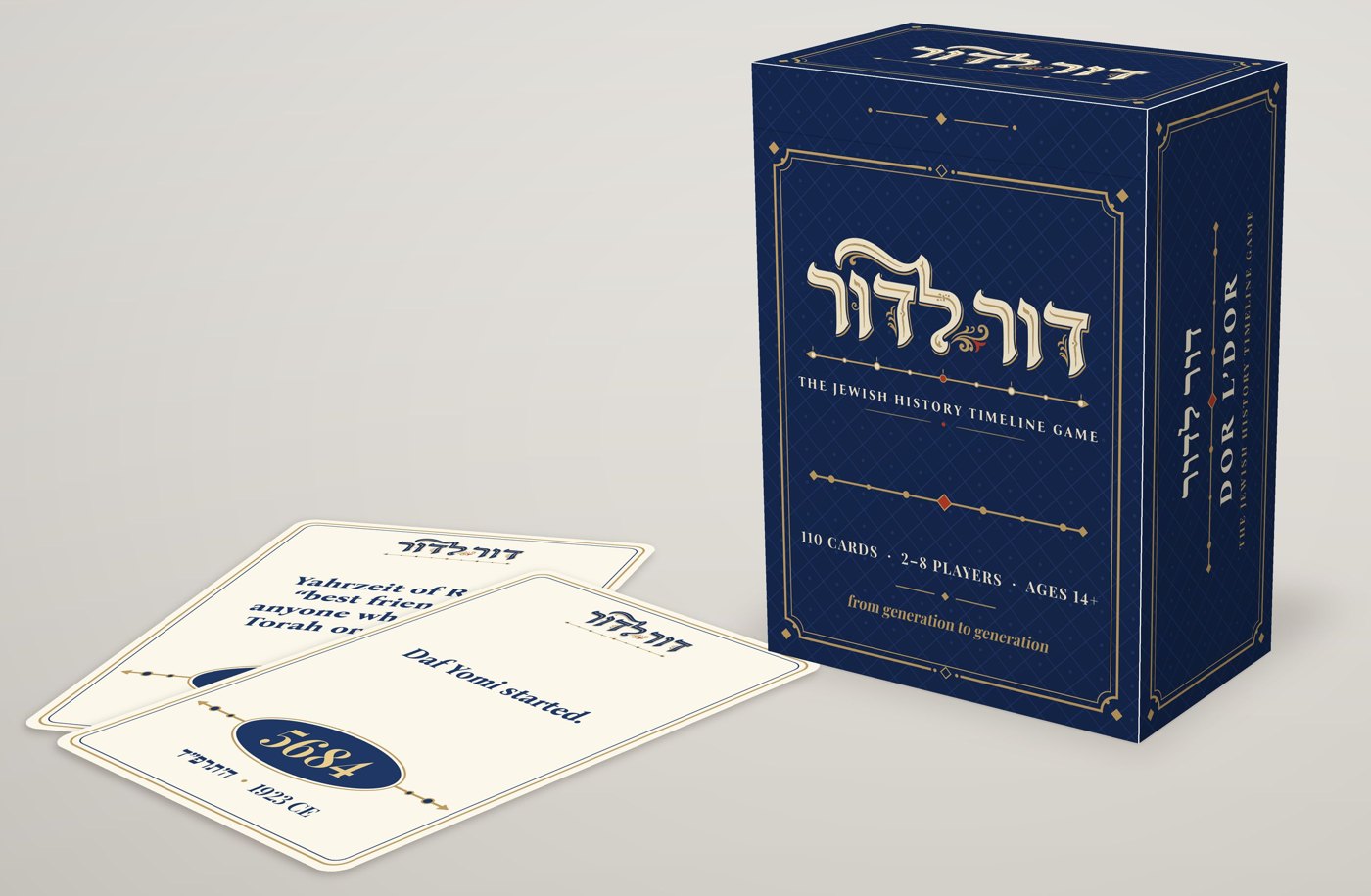
Each event carries its Hebrew year — in numerals and in letters — alongside the civil year, so you can play by whichever calendar your table knows best.
The rules
Learn it in two minutes
Setup
Shuffle all 110 cards into one deck. Keep it stacked so no one can see the dates.
Deal each player one card, date showing. That card starts your timeline.
Winning
The first player to build a timeline of 10 cards wins. For a quicker game, play to 7.
On your turn
The player on your left draws the top card and reads the event aloud, keeping the date covered.
Say where it belongs: before your earliest card, after your latest, or between two of them.
The reader checks the date. Right? It’s revealed and the card joins your timeline in that spot. Wrong? The date stays hidden and the next player gets a chance to place it in their own timeline.
Play passes to the left.
Bring it to your table
A game for Shabbos tables, simchas, and every family gathering
Grandparents, parents, and kids playing the same history — from generation to generation.
Secure checkout powered by Square.